



5000+
1000+
800+
36K
Travellers
Reviews
Trips
Followers


Why go Spiti With Cosmic Scanner?
Recognised by Top Media


Our Instagram


Spiti Valley Group Tour
Guide 2026
A Spiti group tour forces one question before anything else. How much time do you actually have? Seven days gets you deep into the valley fast. Nine days gives it room to breathe, more villages, more road, a softer climb in altitude.
The shift starts just past the Atal Tunnel. Pine slopes thin out. Streams cut bare rock. Brown, grey, and gold take over in a way that looks closer to Ladakh than Himachal. Strange at first. Then you stop wanting anything else.
That first look tends to spark the same debate. Pack the highlights into a week, or spend two extra days finishing the full circuit? Both routes hit Kaza, Key Monastery, Hikkim, Komic, Langza, and Chandratal. The stops look similar on paper. On the road, the rhythm is a different thing entirely.
This guide is for the person standing at that fork. By the end, you will know what each route covers, who each trip fits, how the days actually differ, and which Cosmic Scanner itinerary is worth locking in.
What Is a Spiti Valley Group Tour?
A Spiti Valley group tour is a fixed-departure road trip where travellers join a pre-planned itinerary, shared transport, and organised stays across the valley. Instead of handling permits, routes, and logistics yourself, you simply join the group and focus on the experience.
Fixed Departure Model
Most Spiti group tours run on fixed dates, usually from Delhi or Shimla during the travel season. You pick a departure that suits your schedule and join other travellers who have booked the same trip. That means the route, hotels, camps, and sightseeing stops are already locked in before the journey begins.
Shared Transport and How It Works
The roads in Spiti are long, rough, and often unpredictable, which makes shared transport a practical choice. Most groups travel in a Tempo Traveller or local cabs, depending on the route and group size. You do not need to worry about fuel, parking, route planning, or finding drivers in remote villages where options can be quite limited.
The Team Captain's Role
A good team captain does much more than lead the group from one stop to the next. The journey usually begins with a briefing session on Day 1, where you get a clear picture of the route, altitude challenges, and daily plans. During the trip, the captain manages pacing, coordinates logistics, and steps in when weather, road blocks, or health concerns need quick decisions.
Who Usually Joins These Trips?
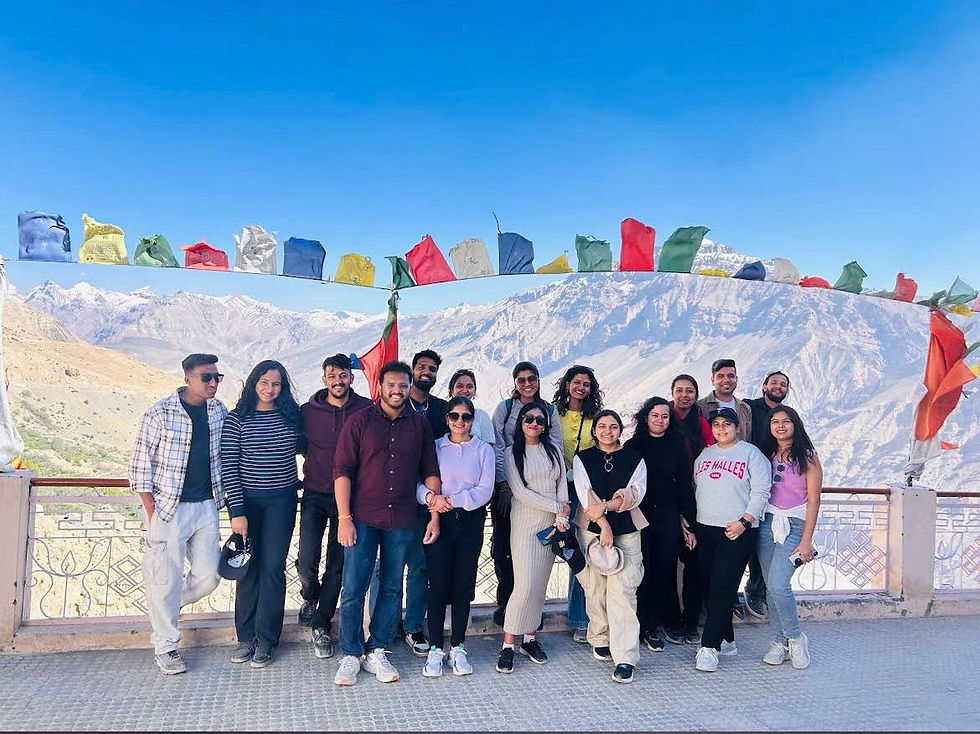
Most Spiti Valley group tours attract travellers between 18 and 35 years of age. Some arrive with friends, while many book solo and meet their travel circle on the road itself. By the second or third day, shared chai breaks, long drives, and campfire chats often turn strangers into familiar faces.
Why the Group Format Works So Well in Spiti
Altitude changes quickly in Spiti, and that is where a group setup helps. Many organised trips carry 24/7 oxygen cylinder support and have people around if someone feels unwell. Remote camps near places like Chandrataal can feel quite isolated, so having company, shared support, and extra sets of hands makes the experience smoother.
How It Differs from a Private Tour
A private trip gives you complete control over dates and pace, but it also comes with a much higher cost. Group tours spread transport and operational expenses across multiple travellers, which keeps the budget manageable. You trade a little flexibility for better value, shared experiences, and a ready-made travel community.
Why Spiti Works So Well for Group Travel ?
Spiti group tours pull people together fast. Long drives, high passes, remote villages, and real shared effort do most of the work. Nobody needs an icebreaker activity. The trip handles that on its own.
Spiti vs Ladakh vs Uttarakhand for Group Trips
Most Uttarakhand group trips centre on a single trek. Ladakh runs on highways and bike circuits. Spiti sits between both. Dramatic mountain roads, ancient villages, and deep cultural stops keep the group moving without locking everything to one summit or one route.
The valley also slows down fast. Small spots like Kaza, Langza, and Komic are too compact for the group to scatter. People stay close. Conversations flow at a pace that faster trips rarely allow.
The Road Trip Does Half the Work
The best group stories start before Spiti even begins. The road through Atal Tunnel, the climb toward Kunzum La, the first yak sighting from a car window. One person spots it. The whole vehicle leans over. That's the trip beginning.
Road hours have a funny pull. Chai stops, mountain bends, and surprise photo breaks turn strangers into people you actually want to sit next to. By the time the road levels off, the group dynamic is already set.
Monasteries Beat Another Crowded Night Out
Not every young group wants a loud café at 11pm. Plenty do. But plenty don't. Spiti answers the second group through places like Key Monastery and Dhankar Monastery. Life moves differently there. The silence feels odd at first.
That oddness is the point. A short exchange with a monk or a quiet moment above the valley sticks harder than a rooftop bar. Ask any group that's been. They bring it up unprompted.
Altitude Pushes People Closer
High altitude affects everyone a little differently. During a Spiti valley group tour, people check on each other without being asked. Tips get shared. Small wins get celebrated. The mountain does something social that no planned activity can replicate.
Near Chandrataal, the temperature drops. The evening stretches. People talk longer than they planned. The fact that everyone made it there together adds something to those hours that's hard to explain after the trip. It's real, though.
Phones Are Enough Here
Not every destination is kind to casual photographers. Spiti is. Clear skies, sharp mountain light, whitewashed walls against brown cliffs, and open valleys that go on longer than expected.
Nobody needs gear. Nobody feels left out of the photo moments. Every person in the group comes back with a few shots worth keeping. That matters more than it sounds.
Which Spiti Group Tour Should
You Choose?
Budget is not the real filter here. Time is. Both trips cover the core of Spiti Valley. Kaza, Key Monastery, Chicham Bridge, Hikkim, Komic and Langza are on both routes. The split is simpler: one week for the highlights, nine days for the full picture.
Short Spiti with Chandrataal - 7 Days | ₹15,400
This trip is built for people with limited leave. It starts with an overnight drive from Delhi to Manali, then climbs straight into Spiti. Two nights in Kaza cover Key Monastery, Chicham Bridge and the high villages.
The last night goes to Chandrataal. Stars, no phone signal, cold air. That part never disappoints.
Seven days is the draw. You see everything most people associate with Spiti. The altitude, the roads, the old gompas, the lake. No extra days needed. No leave balance destroyed.
The trade-off is real. Kinnaur doesn't happen. Chitkul, Sangla, Gue Monastery and the Khab confluence are all off the list. The return also retraces the Kunzum La road. Same scenery both ways. For a first visit with tight leave, this works well. For people who want more, it won't.
Spiti Circuit with Chandrataal - 9 Days | ₹19,800
This one is a proper Himalayan circuit. The trip starts with a Volvo from Delhi to Shimla and enters Spiti through Kinnaur. Sangla and Chitkul come first, then Tabo, then Kaza, then Chandrataal, then out via Manali.
Two extra days shift the whole trip. Near Khab, you see the Spiti and Sutlej rivers meet. In Sangla, apple orchards line the road. At Gue Monastery, a 500-year-old mummy sits in open view. Dhankar Monastery adds one more stop worth the detour.
The body also adjusts better on this route. Altitude gain is gradual from the Shimla side. People entering through Manali often feel it faster. The ₹4,400 gap covers two extra nights, Volvo transfers, four more meals and all of Kinnaur. If you have nine days, this version gives you far more to take home.
Best Time to Join a Spiti Group
Tour in 2026
The best time for a Spiti group tour depends on what you want from the road, the weather, and the pace of the journey. Some travellers chase snow on the high passes, while others wait for crisp autumn light around Chandrataal. The good news is that Spiti offers a different mood in every season between May and October. Pick the right window, and the same valley can feel like a completely different place.
May to June
May and June mark the start of the Spiti travel season, and there is a sense of excitement in the air. The Manali side usually becomes accessible by May once the route through Atal Tunnel and beyond opens up. The Shimla side through Kinnaur tends to open a little later as conditions improve higher up.
This is a lovely time if you enjoy clear skies and fresh mountain colours. Snow still clings to many of the higher passes, while wildflowers begin appearing around villages like Langza and Komic. Chandrataal becomes accessible, camps return, and you can enjoy the lake before the busiest months arrive.
Photographers often prefer this period because snow, blue skies, and green patches share the same frame.
July to August
July and August bring the highest number of departures, and Spiti feels far busier than it does in early summer. Villages are active, cafés stay full, and camps around Chandrataal see a steady flow of travellers. Days feel warmer, which makes long sightseeing stops more comfortable.
The trade-off comes with road conditions. Monsoon rains can trigger landslides on approach routes, especially on the Manali side after heavy spells. Delays are not unusual, and travel plans sometimes shift by a few hours.
This is where a group tour helps, as transport, route changes, and coordination are already handled for you. Despite the unpredictability, monasteries, villages, and local experiences remain just as rewarding.
September to October
September is often the month experienced travellers quietly wait for. Crowds begin thinning out, skies turn cleaner, and the valley feels calmer without losing any of its charm. If you enjoy long views and sharp mountain light, this season rarely disappoints.
Chandrataal looks particularly striking during this period. The water often sits still enough to reflect the surrounding peaks, especially on calm mornings. By late October, road closures start becoming a real concern as Kunzum La and Rohtang prepare for winter.
The full circuit route may face disruptions from mid-October onward, while shorter itineraries remain a safer choice later in the season. Most operators run their final departures in early October.
Places You'll Visit on a Spiti Valley Group Tour
A Spiti Valley group tour is not a checklist run. Each stop brings a different face of the valley: ancient monasteries, remote villages, high lakes, and river crossings that feel like different worlds. The route works because every place adds something the last one didn't.
The Monastery Circuit
Key Monastery sits high above the valley floor. Prayer chants move through its halls. Outside, cold desert stretches for miles. The place is still alive. Monks live and work here every day.
Dhankar feels different. It sits on a cliff edge and looks like it grew out of the rock face. Quieter. More dramatic. Then comes Gue. A Buddhist monk's body rests there, naturally preserved over centuries. Hard to explain what that feels like in person. You just stand there, quiet.
No two monasteries here hit the same note. That's the point of doing all three.
The High-Altitude Villages
Hikkim, Komic, and Langza form a loop that group trips do in a single stretch. Post a letter at the world's highest post office in Hikkim. It sounds small. It doesn't feel small when you're doing it.
Drive on and Komic greets you with thin air and deep silence. It sits near the top of the motorable world. Then Langza. A giant Buddha statue stands at the edge of the slope and looks out across open mountain terrain. The sky here is wide. The views don't have a back wall.
Three villages. A few hours. Worth every minute of it.
Chandrataal and the Kinnaur
Chandrataal is often the stop people mention first when the trip wraps up. The lake shifts colour as the light changes. The stillness around it is real, not a photo filter. After days on rough Spiti roads, seeing that blue water is something else entirely.
The longer circuit route adds a different texture to the trip. Sangla opens up green valleys lined with apple trees. Sharp contrast to Spiti's dry terrain. You notice it fast.
Chitkul sits near the Indo-Tibetan border. Last inhabited village on that route. It has a frontier quality that's hard to put into words. Raw. Quiet. Feels remote in a way that most "remote" places don't.
Khab Bridge is where the Spiti and Sutlej rivers meet. Two rivers coming together at the base of massive slopes. Even on a moving bus, it stops conversation for a moment.
Shorter itineraries skip these. The circuit doesn't. That difference shows up in how people talk about the trip when they get back
Cost of Spiti Valley Group Tour
Spiti costs less than most first-timers expect. Group packages start at ₹15,400 and go up to ₹19,800. The price is rarely the real question. What matters is what sits inside that number, and what does not.
Package Pricing: What You're Getting
Two routes. Two price points. Big difference in what each covers.
-
Short Spiti with Chandrataal: ₹15,400 per person
-
Spiti Circuit with Chandrataal: ₹19,800 per person
That ₹4,400 gap is not padding. It buys more nights in Spiti, more road covered, more fuel and toll costs built in, and extra days through Kinnaur for proper acclimatisation via the Shimla route. Private trips often look cheaper on paper.
They stop looking that way once you price transport, hotels, permits, and route coordination separately. A group package splits all those fixed costs across the full group. The per-person number drops fast.
What to Budget Beyond the Package
Food is the main extra cost. Plan for ₹300 to ₹600 per day in Kaza. Smaller villages tend to charge less. Keep that range in mind.
One thing catches people by surprise. Kaza has the last working ATM before you go deep into the valley. Carry enough cash from Manali. Running short later is a genuine problem, not a minor inconvenience.
Shopping adds up too. Handmade crafts, monastery keepsakes, and locally made Spitian pashmina are worth buying. Set aside a small budget for it. Also factor in your travel to the Delhi pickup point and any extra days in Manali if you plan to stay on after the tour ends.
Is a Spiti Group Tour Worth the Price?
Most travel posts make private trips sound like a bargain. They skip the numbers.
A private tempo traveller for six people can easily cost ₹8,000 to ₹12,000 per person for transport alone. That figure does not include hotels, permits, a local contact, or a trip captain who knows the road. Add those in and the group package starts looking very different.
What the package actually buys: logistics handled, permits sorted, a structured route, and someone on the ground when something goes wrong. You focus on the valley. Not the details. For most people heading to Spiti for the first time, that is worth the price. Full stop.
View our Spiti departures and check availability for your dates.
What to Pack for a Spiti Valley
Group Tour
Packing well makes the difference between enjoying Spiti and spending half the trip feeling cold, dry, or unprepared. Weather shifts fast, facilities stay basic, and long road days are part of the experience. A smart packing list keeps you comfortable and lets you focus on the journey ahead.
Clothing
-
Wear thermal base layers to stay warm during chilly mornings and nights.
-
Add a fleece mid-layer for insulation when temperatures drop.
-
Carry a windproof outer jacket as strong mountain winds are common.
-
Pack a woollen cap and gloves for cold evenings, especially near Chandrataal.
-
Bring full-coverage sunglasses with UV protection. The high-altitude sun feels much harsher than it does in the plains.
-
Choose comfortable trekking shoes with good ankle support for uneven terrain and village walks.
-
Keep a pair of flip-flops for campsites and hotel stays.
Essentials
-
Carry all personal medication in sufficient quantity for the entire trip.
-
Pack Diamox only if your doctor recommends it for altitude sickness.
-
Bring an SPF lip balm as dry mountain air often causes cracked lips.
-
Use a high-SPF sunscreen because sun exposure remains intense throughout the valley.
-
Pack a good moisturiser to deal with the dry climate.
Tech
-
Carry a power bank, and ideally two. Charging options are unavailable at Chandrataal camp.
-
Download offline maps before entering remote parts of Spiti.
-
Keep your phone fully charged before leaving Kaza for onward travel.
Documents
-
Carry your Aadhaar card or another valid government ID for permit requirements and hotel check-ins.
-
Bring copies of any medical prescriptions if you carry regular medication.
Cash
-
Keep at least ₹3,000 to ₹5,000 in cash, preferably in smaller notes.
-
Do not depend on UPI or card payments after Kaza, as network and payment access can be unreliable.
Extras
-
Carry a reusable water bottle to stay hydrated during long travel days.
-
Pack a light daypack for sightseeing and short walks.
-
Bring a small torch or headlamp for camps, power cuts, and early morning starts.